Archive | November, 2011

Wine Flights Add Dimension to Tasting

4 Nov

            Week 2 of my ISG Sommelier class provided a great opportunity to taste and thoughtfully compare examples of two of my favorite grapes: cabernet sauvignon and pinot noir.  As these grapes are among my favorites, we drink a lot of these wines.  We’ve sought out major cab and pinot producing areas  to learn, tour and taste: the Napa and Sonoma Valleys, the Barossa Valley in Australia, the Central Otago area of New Zealand, and Oregon’s Willamette Valley.  France is not my husband’s favorite place, but I’m scheming to make it to Bordeaux and Burgundy sometime soon.  I’m a travel nut to begin with.  But I really love integrating my love of wine with my travel experiences.  I find that seeing a place, absorbing its landscapes and smells, and meeting the people that live there and make wine adds a layer of understanding and appreciation that I find hard to glean any other way.  I simply wouldn’t trade the opportunity to visit wineries and talk to winemakers.

            But I learned this week that visiting wineries and enjoying wines doesn’t present the entire picture.  When I taste wines in isolation, I focus on that wine, its appearance, smells and tastes.  I assess if I like it and whether I would enjoy experiencing it again.  At least subconsciously, that involves comparing it to my memories of other wines – which, if I am honest, is not a very accurate process given that I have not kept a wine journal and memory is fallible.

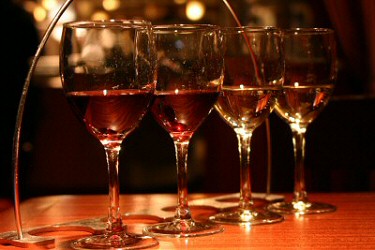
            A crop of wine tasting bars have emerged in Houston in the last few years, introducing the concept of “flights” to mainstream consumers.  Wine flights are a great way to experience new wines because they provide an opportunity for side by side comparison, which takes a potentially faulty memory out of the equation.  A limitation to this approach, in my experience, however, is that in the absence of a special tasting event, the goal of bars and restaurants is for customers to enjoy consuming rather than learning from their experience.   The wines are typically served in order of their relative power on the palate, and only passing mention is made of regional origin or maker.   The variety presented may or may not invite a meaningful opportunity to experience different methods of vinification, differences in style or climate or varying regional characteristics.

            I really enjoyed the experience of tasting, evaluating and sharing flights of 6 cabs and 6 pinots in my class this week.  I’ve known for a long time that the average Bordeaux is more subtle, earthier and elegant than the average California cab and that the average New World pinot is more fruit forward and less earthy than the average red Burgundy.  But tasting them blindly, side by side…..dissecting each detail with the help of a tasting sheet and discussing my experience with an expert really helped me begin to understand the concepts of terroir and regional styles of vinification in a whole new way.  I still want to travel and visit wineries, and I will continue enjoying Houston’s tasting bars.  But now I also want to include the practice of actively comparing regional examples of grape varieties to my repertoire of regular tasting practices.

https://www.internationalsommelier.com/
Reaping the Rewards of Patience: The Joys of Long Cellared Wine.

3 Nov


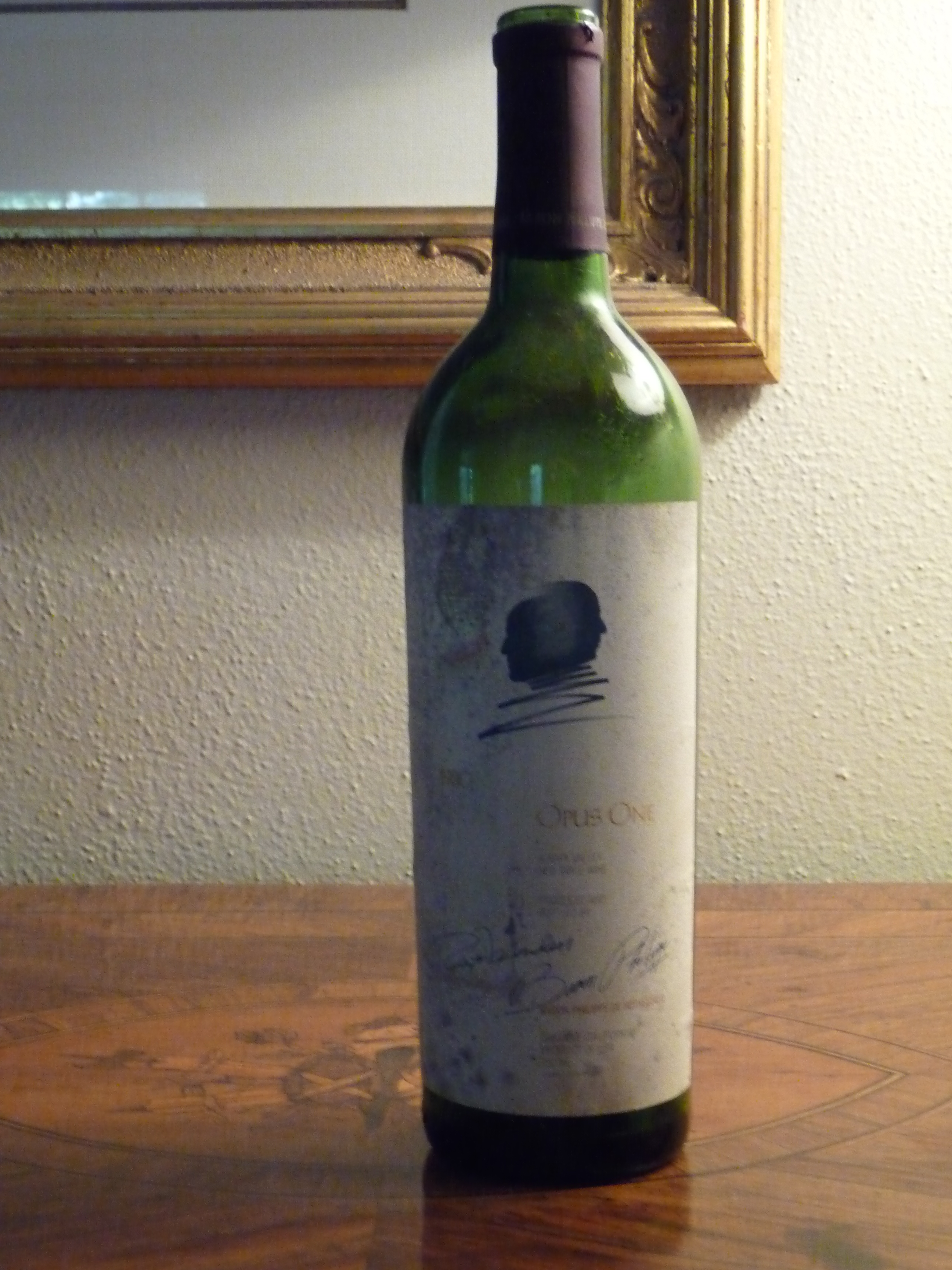
            Last night, Jay and I were alone for the evening in our home for the first time in years.  Two of our kids have left the nest and the third was celebrating his first homecoming dance and was out for the entire evening.  We opted to stay in and celebrate this glimpse of the life, senza kids, by opening a bottle from our cellar.  As Jay was really the one who initiated what is now our mutual passion, he has always been the “cellar master” and directs our consumption choices.  Last night, he offered me a choice of a “big” California Cab, or a Bordeaux.  Somehow, with the first hint of fall in the air, “big” sounded perfect.  A few minutes later, I found Jay happily decanting a bottle of 1980 Opus One.

            There were a few issues removing the cork, which had grown quite soft.  And the label was mildewed, a challenge with our high Houston humidity.   But the wine was lovely, even if 1980 was a bad year for California wine.  It was beautifully soft and mellow, with little fruit and a bit of lingering tannin.  Drinking it felt a little like pulling on my favorite sweatshirt on a chilly morning – oh so easy and comfortable.  Was it complex and interesting, no.  But did I enjoy it – oh yes.

            The experience has given me some things to think about.  We started collecting bottles with long-term cellar potential in the mid 1980’s – right after we graduated from college.  Our early income stream wasn’t sufficient to put many higher end bottles away, but every year we selected a half case or so.  The 1980 Opus One was one of our first.

            We’re remiss in the way we handle our cellar.  To date, we haven’t inventoried what we have and our collection habits have grown considerably.  We aren’t knowledgeable about what we should drink when to maximize our enjoyment or investment.  I honestly don’t know if our Opus might have been better a decade ago, or if it might have continued to improve.  It seemed to me that the fruit had all but disappeared, but yet some tannins remained.  I’m still learning about the “life cycle”of wine, but I’m guessing that we missed the wine’s prime. I am excited that my class will provide an opportunity for me to learn more about the aging process and how to optimize our cellar.  And I’m even more excited to have the confidence to pull the cork on more of our older bottles and experience, with greater frequency, the treasure inside.

“Try Before You Buy” is a Great Way to Discover New Wine

2 Nov

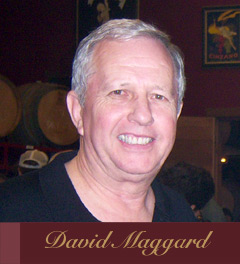
          I got a call yesterday from David Maggard, the “Wine Man”.  David is a fellow Houstonian who markets wine in what is, to me, a somewhat unique way.  As I understand it, he finds little known, underappreciated wines he likes, negotiates distribution contracts and markets them directly to consumers.  He does not, as I understand it, maintain a storefront.  He donates wine tasting lunches and dinners to charity auctions where he showcases his wines – most of which are quite reasonably priced.  He is a fabulous cook, a charming guy and his events are wonderful.  Once you are a customer, he sends emails of new offerings.  Last night he called and offered to bring a few bottles that he thought we might like to our house for a private tasting.

          There’s something about the image of a “door-to-door” wine salesman that I find intrinsically appealing.  First, I always enjoy an opportunity to experience something personally before I buy it.  There are many great wine reviewers out there and I often value what they have to say.  But sometimes my preferences are different than the “experts”.  That really plays to my advantage, because wines that receive wide critical acclaim have price tags that reflect their good fortune.  Research shows that I’m not unique, but am rather part of a nationwide trend.  A recent study of top U.S. wine retailers conducted by Napa Technology found that “76 percent of retailers agree that wine buying customers are savvier than they were 4 years ago.   Today’s consumers are willing to pay more, when given the opportunity to sample wine before they buy”[i]

          Secondly, wine sometimes seems so clouded in an aura of mystery and intimidation.  As with any commodity, quality, rarity and demand influence price.  I love fine wine and I love fine food.  But just as I would not choose to dine at the French Laundry every day, I do not choose to indulge in elite wines every day.  Living in Europe part time has opened my eyes to the culture of wine as a part of everyday life.  In Italy, good quality local wines are readily available at very reasonable prices.  I love to apply the “comfort food” approach to wine.  I like to invite it into a meal like family, where it can, like family, fade into the background and contribute positively to the overall experience simply by being itself.  And if someone wants to come to my door and introduce me to “family”, I think that is perfect.  It was so perfect, in fact, that I bought 4 cases.  Thanks, David for a lovely evening and making the discovery of new wines so easy and enjoyable.

David Maggard

The Wine Man

wineman@windstream.net

281-980-1955


[i]Top 40 Wine Retailers Weigh in on Trends; Napa Technology Survey Shows Retailers Adding Tasting to Aisles and Profits”, World news Report October 19, 2011 (http://www.einnews.com/247pr/241842)

photo from http://www.wineman.biz/about.html

Sommelier in Training – Mad Scientist for the Day

1 Nov

            Sommelier class number 2 started with some interesting exercises – we played mad wine scientist.  For the first, our teacher gave us each cups of flavor/sensation isolating liquids:  tannin for astringency; sugar water for sweetness; acetic acid for acidity and quinine for bitterness.  We were able to taste each liquid and really focus on the sensations in our mouths –not only what flavor was present, but also how it felt, and what part of the mouth perceived the sensation.  After we tasted each liquid independently, we blended them.  I was interested to discover that the whole can, indeed, exceed the sum of the parts.  While I wouldn’t serve the concoction I mixed at my next cocktail party, it was a concrete example of balance and how the component flavors of wine marry to produce the elixir I love.

            For our second exercise, we were given five unidentified glasses of wine and a plate with a sugar cube, a lemon wedge, salt, mozzarella, parmesan and a slice of jalapeno.  We tasted and described the dominant flavor in each wine and then paired each wine with each food item.  I was intrigued to see that acid and salt neutralize acid while sweet neutralizes sweet and spice.  Moreover, it was interesting, after the wines were identified, to learn why I like a Riesling with spicy Asian food, cabernet sauvignon with savory aged parmesan and pinot noir with soft cheese.

            I loved the tactile element of learning.  Balance and food pairing will seem so much more tangible the next time I describe the taste in my glass or order wine to accompany a meal.  If I had 100 career choices, mad scientist would not make the list.  But I’m grateful that I played mad scientist for a day.